




A child does not need to be excited about every page in order to love the Quran. What matters is the relationship being built over time: Quran is a place of guidance, attention, achievement and closeness to Allah — not the part of the day when the child expects criticism, comparison or an argument.
Parents often say, “I want my child to love the Quran.” It is a beautiful goal, but it can quietly become another performance target. We may start measuring love by how quickly a child memorizes, whether they sit perfectly still, or whether they ask to practise without being reminded. Children are not machines, and even adults do not approach meaningful work with identical energy every day.
Loving the Quran does not mean every lesson feels easy. Reading new Arabic sounds can be hard. Revision can feel repetitive. A child may occasionally prefer a game to practice. The healthier question is: What feeling is my child repeatedly carrying away from Quran time?
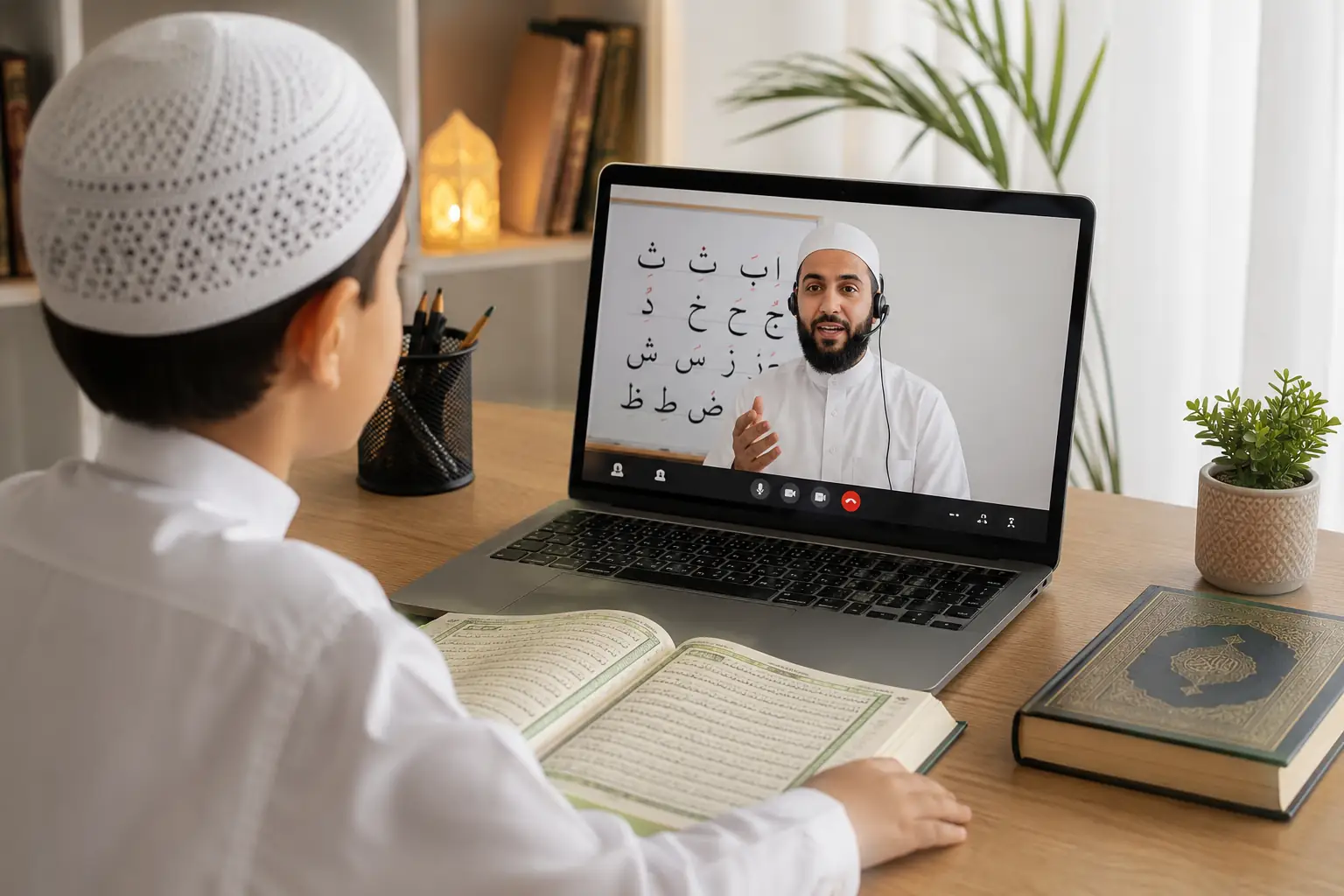
Pressure can hide in ordinary habits
Pressure is not only shouting. It can be a constant comparison with a sibling, repeating “you already learned this” with frustration, extending a session because the parent wants to “finish the page,” or correcting five different things while the child is still trying to solve the first one.
A useful reset is to watch one week without trying to fix everything. Is your child usually tired when the lesson starts? Is the material actually at the right level? Are instructions clear? Is the child being asked to read and memorize at the same time? Does one repeated mistake dominate the whole session? Is the relationship with the teacher comfortable and professional?
Gentleness is not the opposite of standards. The Prophet ﷺ taught that Allah loves gentleness; the authenticated wording can be read on HadeethEnc. A gentle teacher still corrects. A gentle parent still expects practice. The difference is that correction does not become humiliation.
Build a small routine that survives busy weeks
Families often design Quran plans for their best day: everyone is rested, dinner is early, homework is finished and nobody is rushing. A better routine is built for an ordinary Tuesday.
- start at a predictable time or after an existing habit;
- keep the goal small enough that it can still happen on a school night;
- separate new learning from revision when the child is overloaded;
- end with one clear success the child can name;
- leave some Quran interaction that is not an assessment — listening together, discussing a short meaning, or hearing a favourite reciter.
Consistency matters, but consistency is not perfection. Missing one day does less harm than turning the next three days into a punishment for missing it.

Choose a teacher your child can actually learn with
The best teacher for a child is not simply the person with the longest list of qualifications. The teacher needs accurate recitation and subject knowledge, but also the ability to notice attention, hesitation and frustration. Some children need energetic prompting; others read better when the teacher gives them a few seconds of quiet before correcting.
Listen to the language used around mistakes. “Try that sound once more” is different from making the child feel careless or incapable. A good lesson should be focused without feeling unsafe.
You can review Ayat’s approach and team information on the Teachers page. A trial lesson is also useful because the goal is not to impress the teacher; it is to see whether the teaching style fits the child.

How NOT to Teach Children About Islam - Q&A With Nouman Ali Khan
The video above is an external parenting resource selected for additional context. Ayat Online Academy is not affiliated with the channel or speaker.
A bad Quran day does not need to become a family crisis
If your child is unusually resistant, shorten the session before you turn it into a battle. A brief review done calmly can be more valuable than twenty extra minutes of tears. Later, when everyone is settled, ask what felt difficult. Children do not always have a precise answer, but patterns become visible over time.
If resistance continues for several lessons, talk to the teacher. The level may need adjusting. The pace may be wrong. The child may need a different explanation, a shorter target or a different teacher. Changing the method is not the same as giving up on the goal.
Measure progress without making it a contest
Useful progress is often quieter than “finished another surah.” A child who now recognizes letters without guessing, fixes one Makharij error independently, remembers yesterday’s correction, or returns to the lesson with less anxiety is moving forward.
Try praising what the child controlled: “You slowed down when you reached that word,” “You remembered the correction,” or “You kept trying even when the sound was difficult.” This makes improvement visible without turning another child into the measuring stick.

The long-term aim is bigger than completing a textbook. We want the child to grow up knowing that the Quran deserves effort and reverence, while also feeling that learning it is a door they can keep returning to.