



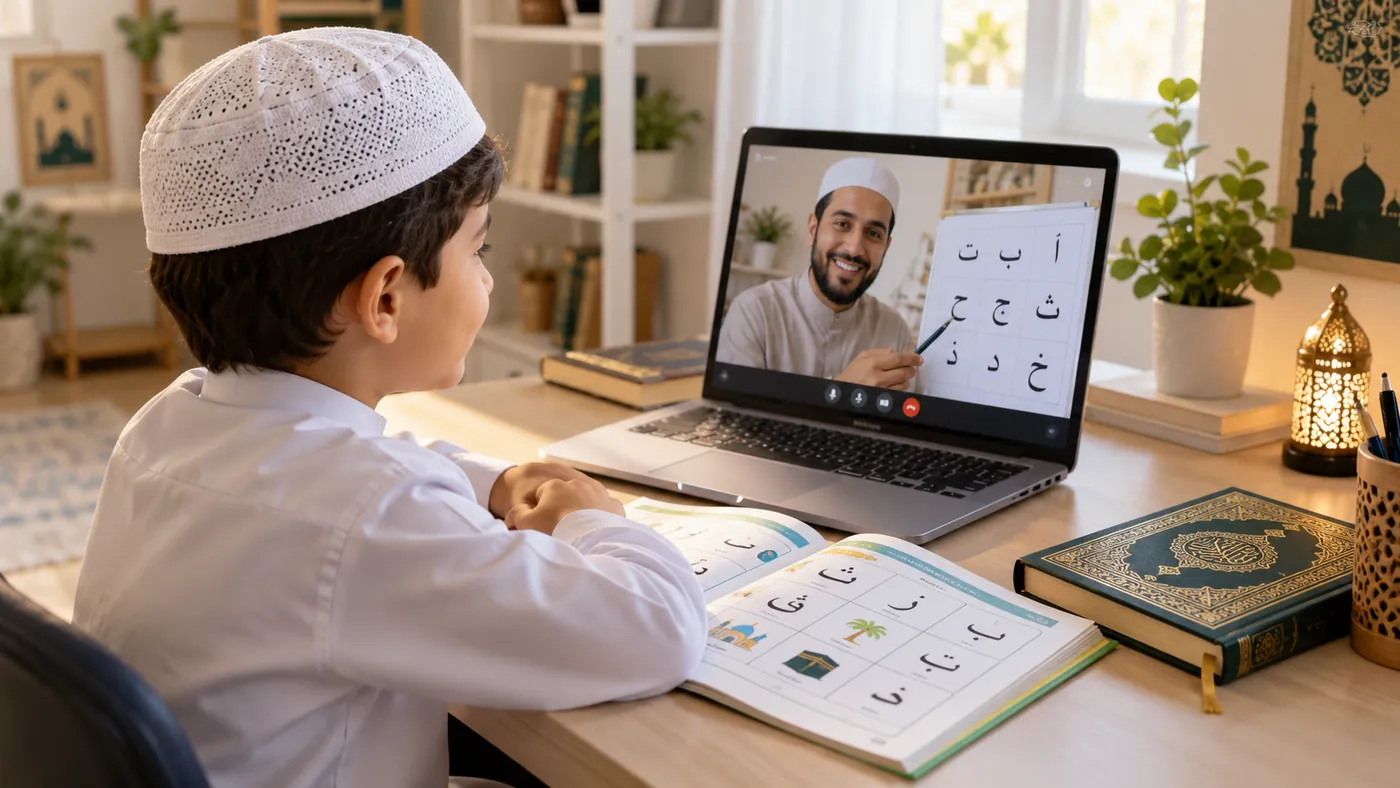
There is no honest universal number. A learner who already knows the Arabic alphabet is starting in a different place from someone meeting the letters for the first time. Instead of asking only “How many weeks?”, look at four things: your starting level, how often you practise, whether someone corrects your reading, and whether you review the same mistakes long enough to change them.
“How long will it take me?” is one of the first questions adults and parents ask before starting Quran lessons. It is a fair question. People have work, school runs, exams, family routines and budgets to plan around.
The problem begins when the answer becomes a sales promise. “Read fluently in 30 days” sounds reassuring, but two beginners can sit in the same first lesson and be months apart in what they already know.
One may recognise every Arabic letter and only need help joining them. Another may know a few short surahs by memory but cannot follow the Arabic script. A third may read a page slowly while repeating several pronunciation errors learned years ago. Calling all three “beginners” does not make their timelines identical.
The honest answer: your starting point matters more than the calendar
If you want a useful estimate, let the teacher hear you read first. A five-minute sample often says more than a long questionnaire. It shows whether the main task is letter recognition, decoding, fluency, pronunciation, basic Tajweed, or a mixture of several things.
The hadith about the reader who finds recitation difficult is especially comforting here. Difficulty is not treated as humiliation; the struggling reader who continues is given encouragement. See the authenticated narration at HadeethEnc.
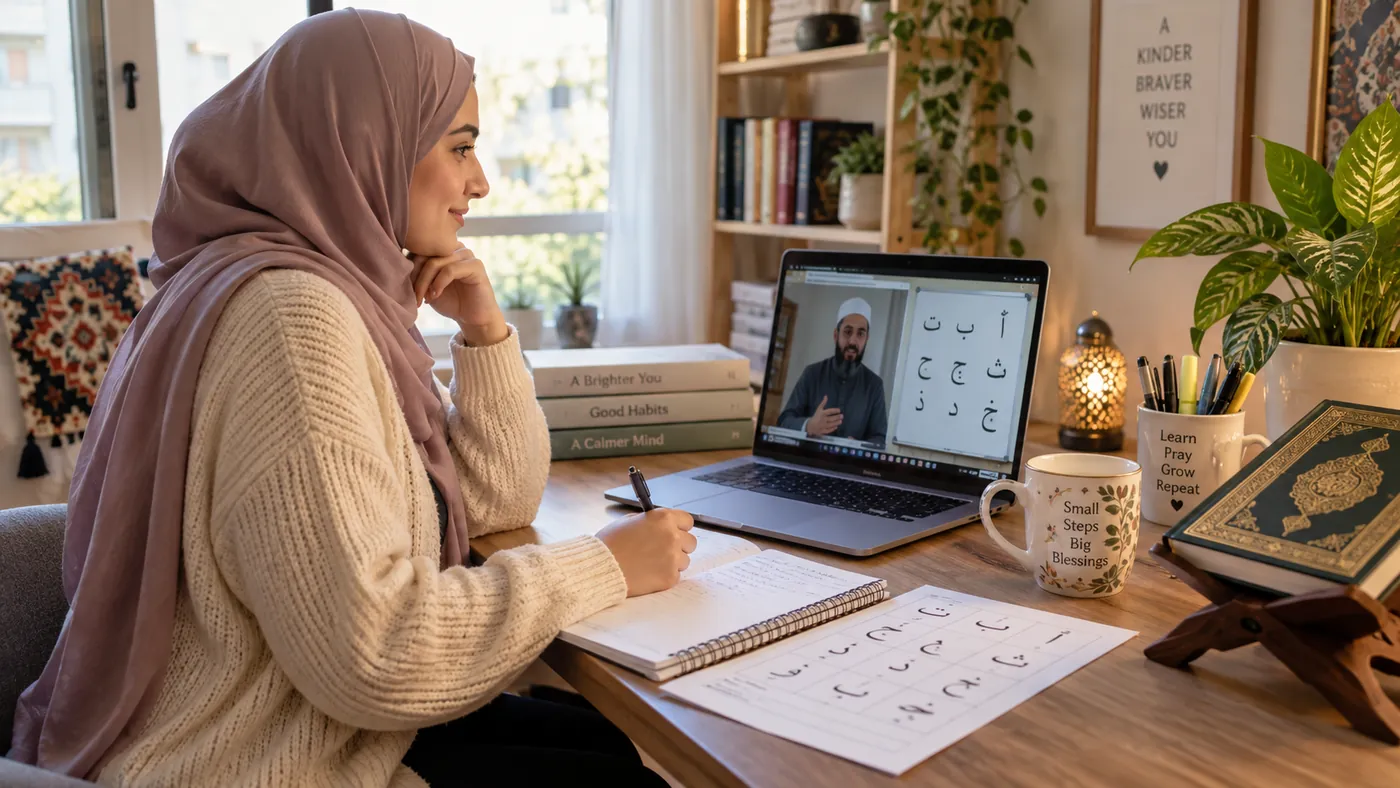
Think in stages, not in a magic number of days
A better way to understand progress is to ask what stage you are in now and what the next stage looks like.
- recognising letters and their common shapes;
- reading letters with basic vowel marks;
- joining letters without guessing;
- handling Sukoon, Shaddah and Tanween;
- reading short Quranic words and phrases aloud;
- correcting recurring articulation mistakes;
- building steadier reading before increasing speed.
You may move quickly through one stage and spend longer on another. That is normal. A learner who speaks Arabic may recognize words faster but still need Tajweed correction. A non-Arabic speaker may need more time with unfamiliar sounds but can still build strong reading habits through careful repetition.
The Quran directs us toward measured recitation in Surah Al-Muzzammil 73:4. For a beginner, that is a healthier direction than racing through pages to prove speed. You can read the verse on Quran.com.

What usually helps progress move faster?
Not “talent”. Usually it is a small group of ordinary habits.
1. Reading often enough that the letters stay familiar
Ten focused minutes on several days can be more useful than a long session once in a while. Reading is a skill: the gap between practices matters.
2. Repeating corrected material
If the teacher corrects the same sound three weeks in a row, moving to more pages is not solving the problem. Keep a short “mistake list” and revisit it.
3. Reading aloud
Silent recognition and spoken recitation are not the same task. Your teacher needs to hear the sound you actually produce.
4. Using a level-appropriate path
A complete beginner should not be dropped into material designed for a fluent reader. Our Quran Foundations program is intended to give beginners a structured starting point rather than a random collection of lessons.

What commonly slows people down?
Long gaps, switching resources every week, relying heavily on transliteration, being afraid to read aloud, and constantly chasing new pages can all make learning feel busy without making the reading much stronger.
IslamWeb’s discussion on learning Quran recitation and receiving it orally from a teacher is useful here. Reading has a listening-and-correction component that a static page cannot replace.
When should a teacher be able to give you a clearer estimate?
Not before hearing you. After a few lessons, the estimate becomes more meaningful because the teacher has seen your attendance, practice, recurring mistakes and ability to retain corrections.
Ask for a progress description rather than a guarantee: “What can I do now that I could not do four weeks ago?” and “What is the next reading skill we are trying to make stable?” Those questions produce better information than asking for a graduation date on day one.
A slow Quran reading lesson for beginners
The video above is an external beginner reading lesson selected because it demonstrates slow letter-and-recitation practice. Ayat does not claim affiliation with the channel.
Questions beginners ask
Can I learn to read the Quran in 30 days?
You may make real progress in 30 days, but a fixed fluency promise ignores your starting level, practice and pronunciation needs.
Do I need to speak Arabic first?
No. You can learn Quran reading skills before becoming conversational in Arabic.
Should I practise every day?
Daily practice can be helpful, but the important point is a routine you can sustain. Short regular reading is usually better than occasional intensive sessions.
What should I do if I feel stuck?
Ask your teacher to identify the one or two recurring errors that are blocking you. Narrow practice is often more useful than adding more material.
Sources & further reading
Want a realistic starting point?
A trial lesson can show which reading skills you already have and what you actually need next.