



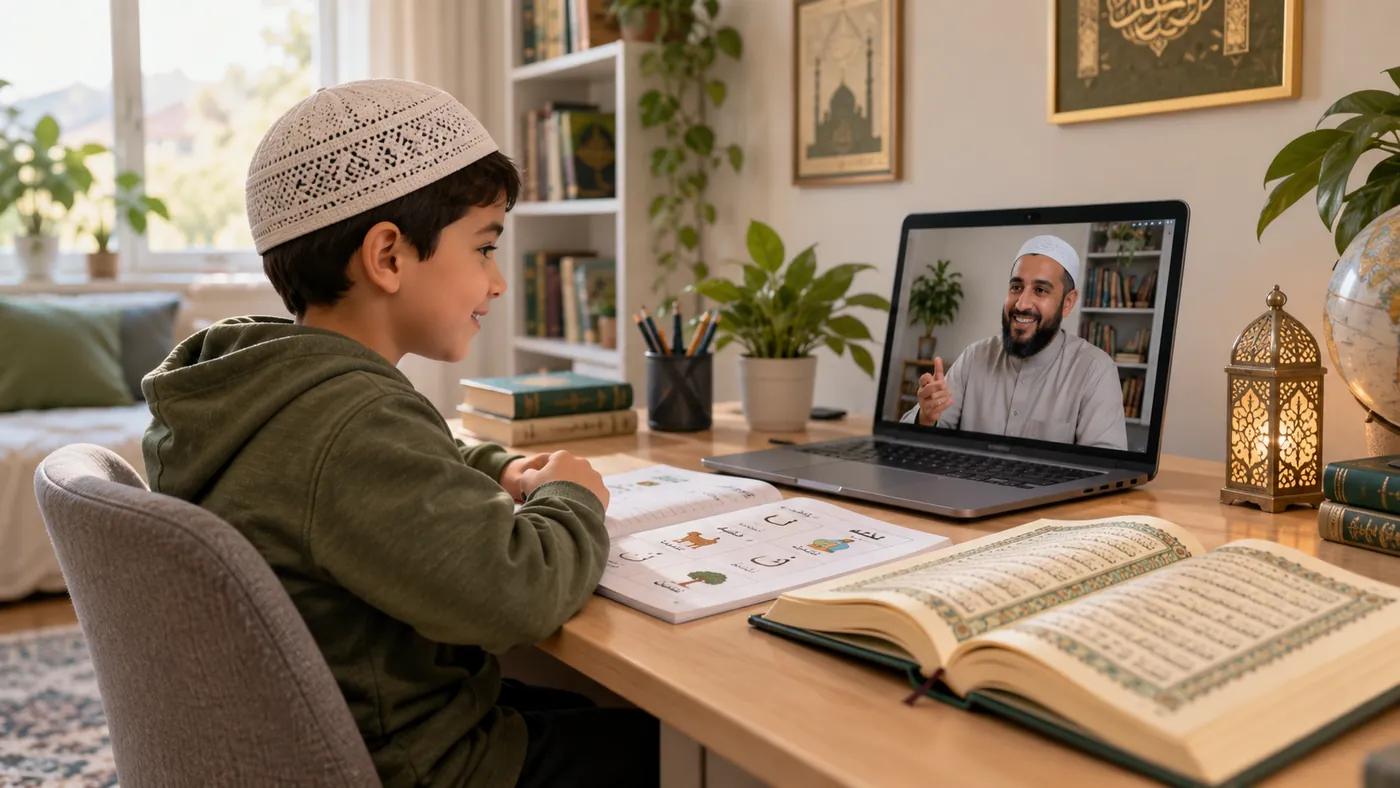
When choosing Quran classes for a child, do not judge only by price, timetable or how many pages the teacher promises to finish. Look for a teacher who corrects accurately without frightening the child, a clear safeguarding process, age-appropriate lesson length and pace, regular feedback, and a plan that helps the child build both skill and a healthy relationship with the Quran.
Parents often arrive with a simple question: “Who is the best teacher?” The more useful question is usually: “Who is the right teacher for this child?”
A six-year-old who is meeting Arabic letters for the first time needs a different lesson from a confident eleven-year-old working on memorization. A shy child may need time before reading loudly. A very energetic child may need shorter tasks and more active repetition. Good teaching begins when the child in front of the screen is treated as a real person, not as a place in a syllabus.
Islam places real responsibility on parents and carers. The authentic hadith “Every one of you is a guardian and responsible for his subjects” includes responsibility toward the household and children. See the narration at HadeethEnc.

Start with the child’s relationship with learning
It is possible to make a child complete a lot of material while quietly teaching them to dread the lesson. A strong Quran program should care about accuracy and effort, but pressure is not the same as seriousness.
A child should understand that mistakes are expected during learning. Correction can be firm and clear without sarcasm, shouting or comparison with siblings.
- Does my child know what they are currently trying to improve?
- Can they make a mistake without freezing?
- Does the teacher notice repeated errors or simply move on?
- Is the lesson pace suitable for the child’s age and attention?
- Does the child receive praise for real effort rather than empty praise for everything?
For children who need a structured beginning, see Quran for Kids.
A good reciter is not automatically a good children’s teacher
Quran knowledge matters. So does the ability to teach that knowledge to a child.
Watch how the teacher responds when your child forgets something that was covered last week. Do they diagnose the problem? Do they repeat in a different way? Do they know when the child is confused versus simply distracted?
For younger children especially, tone matters. A child who becomes afraid of the teacher may begin hiding mistakes instead of learning from them.
Online safety should be clear, not vague
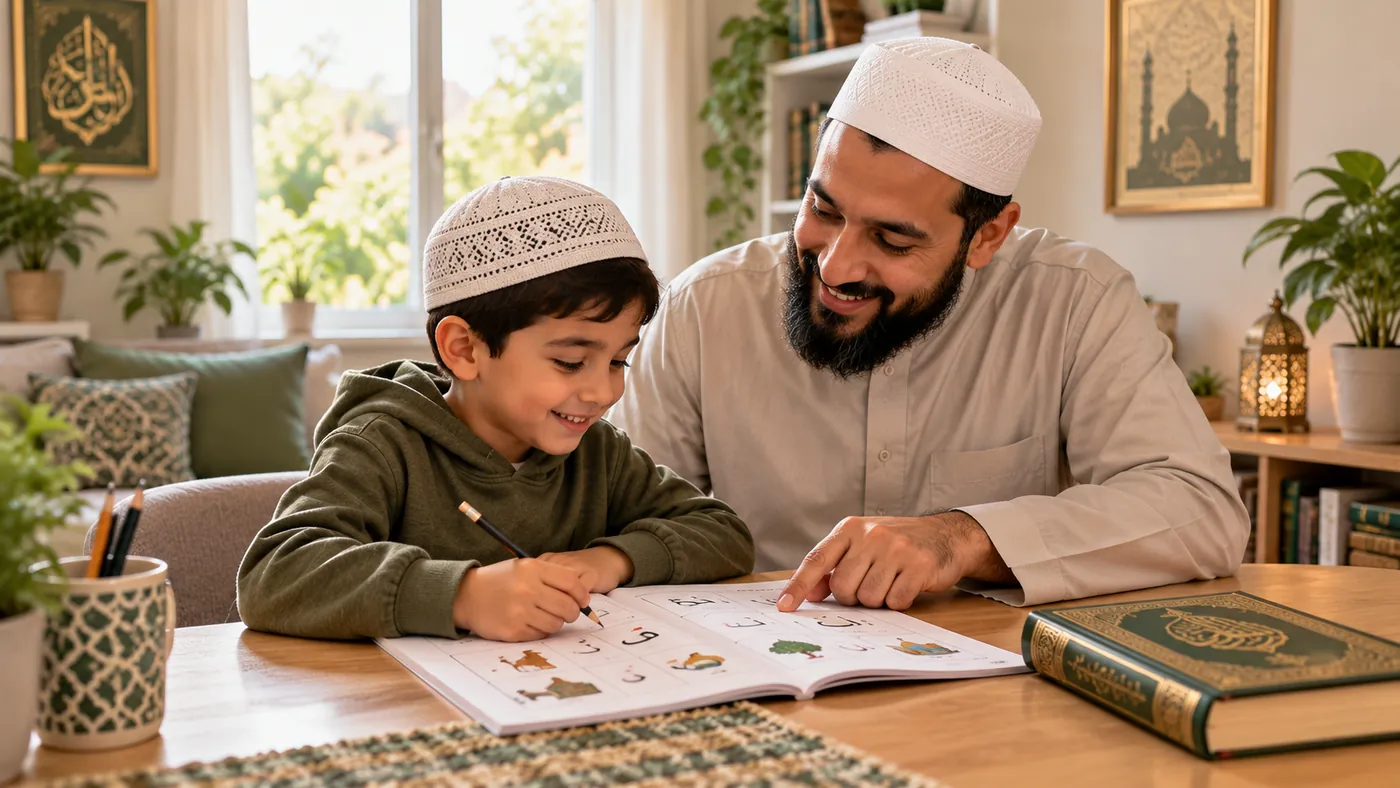
Parents should know how lessons take place, what platform is used, who can contact the child, how concerns are reported, and what the academy expects from teachers and families.
For younger learners, using a shared family space is often sensible. Parents do not need to interrupt the whole lesson, but they should never feel that the learning environment is a black box.
Read Ayat’s Child Protection & Safeguarding policy and ask questions if something is unclear. A safeguarding policy is useful only when families can understand how it works in practice.

Measure progress by more than pages
“They finished ten pages” sounds measurable, but it does not always tell you what the child can now do independently.
Better progress questions include:
- Are letters recognised faster?
- Are the same pronunciation mistakes happening less often?
- Can the child retain yesterday’s memorization after several days?
- Can they read a familiar passage with less prompting?
- Do they understand the small Tajweed point they are practising?
For memorization, revision is not “lost time”. Returning to what has already been memorized is part of protecting it. The Prophet ﷺ instructed Muslims to keep reviewing the Quran because it can slip from memory; see HadeethEnc.
What if your child starts resisting Quran class?
Do not immediately assume laziness or weak faith. Ask what changed. Is the lesson scheduled after a long school day? Is the material too easy or too difficult? Does the child feel embarrassed by correction? Is there a personality mismatch with the teacher?
Sometimes the answer is a small change in time or pace. Sometimes a different teacher is the healthier choice. The aim is not to remove every challenge; it is to make sure the challenge is educational rather than harmful.
Raising a child who genuinely loves the Quran
The external video above is a parenting reminder from CelebrateMercy about nurturing love for the Quran. It complements the topic; Ayat is not affiliated with the organisation.
Parents teach something even when they are not the teacher
A child notices whether the Quran is treated as a family priority only when lesson time arrives, or whether adults in the home also read, listen, ask questions and return to the Quran after mistakes.
You do not need to pretend to be perfect. A parent saying, “I am working on my reading too,” can make learning feel like part of family life rather than a task assigned only to children.
Questions parents often ask
What should I look for in a teacher?
Knowledge, patience, accurate correction, age-appropriate explanation, reliability and respectful communication.
Should I stay in the room?
That depends on age and safeguarding arrangements, but parents should always know how the lesson is supervised and how communication works.
How much homework should a child have?
Enough to reinforce the lesson without turning Quran study into an unmanageable burden. The right amount varies with age, level and school workload.
What if the child dislikes the teacher?
Listen for the reason. A genuine mismatch can affect learning, and changing teachers is sometimes more sensible than forcing the relationship indefinitely.
Sources & further reading
Find a lesson style that fits your child.
A trial lesson lets you observe the teacher-child fit before building a longer routine.