




For a learner, a useful starting point is this: Tilawah is the act of reciting the Quran; Tajweed is the technical knowledge and practice that protects pronunciation during that recitation; Tarteel describes a measured, clear and deliberate way of reciting. The Arabic terms carry richer shades of meaning, but this distinction keeps the study practical.
Confusion happens because the three ideas overlap in real life. A person may perform Tilawah while applying Tajweed and aiming for Tarteel—all in the same five minutes.
So the words are not competing labels for separate activities. They describe different aspects of the same relationship with the Quran.
The short practical distinction
If someone says, “I am doing Tilawah,” they are talking about reciting. If a teacher says, “We need to fix the Tajweed here,” the focus is on articulation or a recitation rule. If the advice is “read with Tarteel,” the emphasis is on clarity, deliberateness and measured delivery.
That framework is deliberately simple. Classical Arabic usage and scholarly discussions can add further nuance.

Tajweed: giving the sounds their proper treatment
Tajweed study deals with matters such as Makharij, letter characteristics, rules of Noon and Meem, Madd, stopping and other recitation details. The word is often explained in terms of making something good or excellent.
For a beginner, Tajweed should be audible, not merely theoretical. Knowing the name “Ikhfa” matters less than producing the transition correctly when it appears.
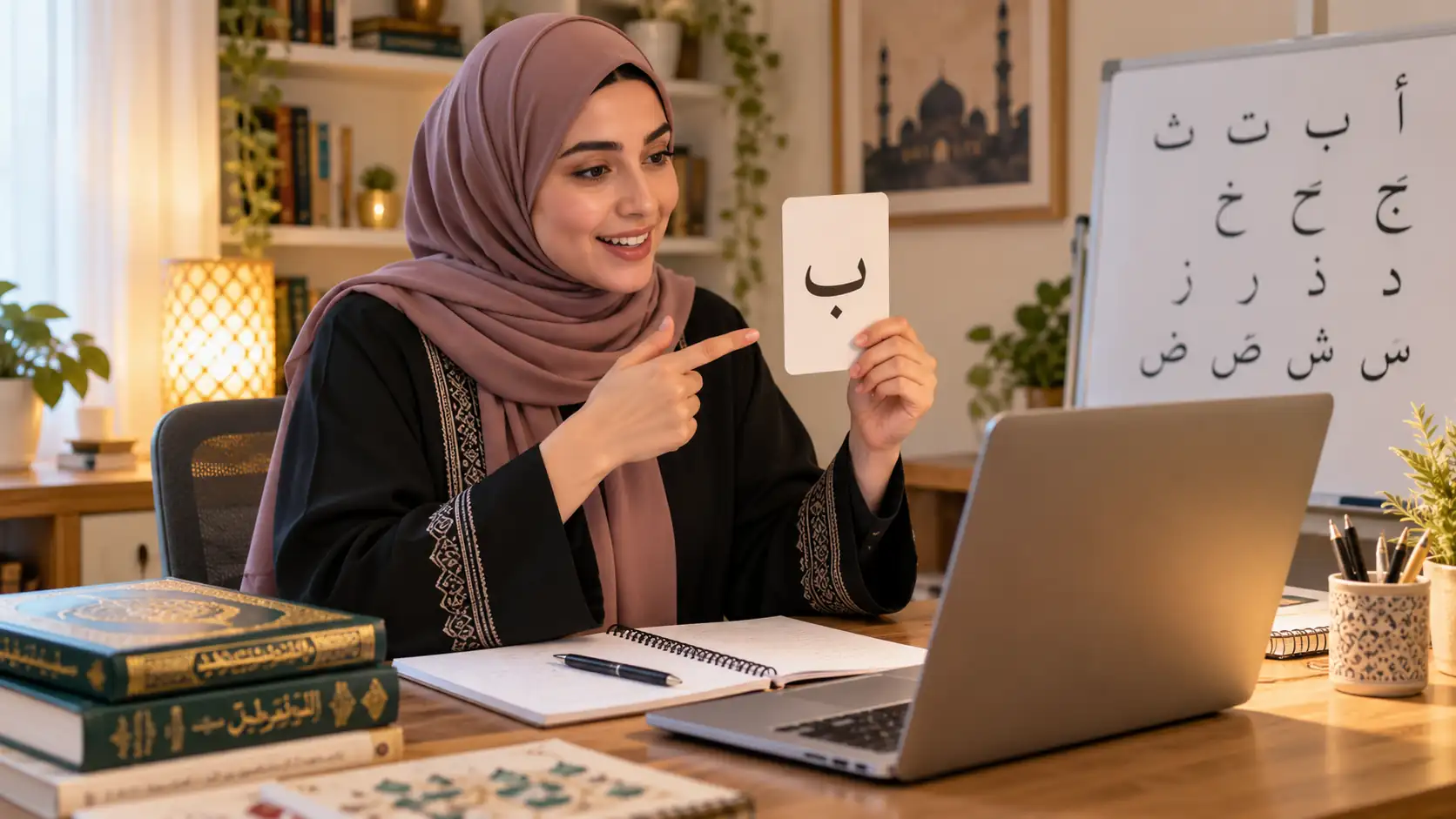
Tilawah: the broader act of reciting
Tilawah refers to the recitation of the Quran and, in broader Islamic usage, carries a rich sense of following and engaging with what is recited. In an academy timetable, however, “Tilawah practice” usually means actual connected recitation with correction.
This is where separate drills return to real reading. A student who has practised one rule needs Tilawah to learn whether that rule survives across a full passage.

Tarteel: measured and clear
Quran 73:4 directly uses the command associated with Tarteel. In practical teaching, it reminds learners not to rush over letters and meanings.
Tarteel should not be reduced to “the slowest speed.” A recitation can be calm and measured without being artificially stretched.

Why teachers use the words differently
One teacher may label a class “Tajweed & Tilawah.” Another may describe a program as “Tarteel.” These titles are not standardized product categories across the Muslim world.
Ask what happens in the lesson: are you learning rules, reading to a teacher, receiving correction, building fluency, or combining all of those? The actual method matters more than the marketing label.
What should a learner focus on?
A complete beginner should build correct letters and basic reading while receiving simple Tajweed correction. As reading becomes steadier, connected Tilawah gives the rules context, and Tarteel keeps the pace controlled.
Our teaching approach treats these as connected skills rather than isolated terminology.
The clearest Quranic reference for Tarteel in this beginner discussion is 73:4 on Quran.com. The virtue of learning and teaching the Quran is recorded on HadeethEnc.
If you remember only one thing: Tilawah is what you are doing, Tajweed helps you do it correctly, and Tarteel reminds you to do it with measured clarity.